
World of Warcraft "Midnight" Expansion Review
Part 1 of a 3 Part Retrospective On The Opening Patch

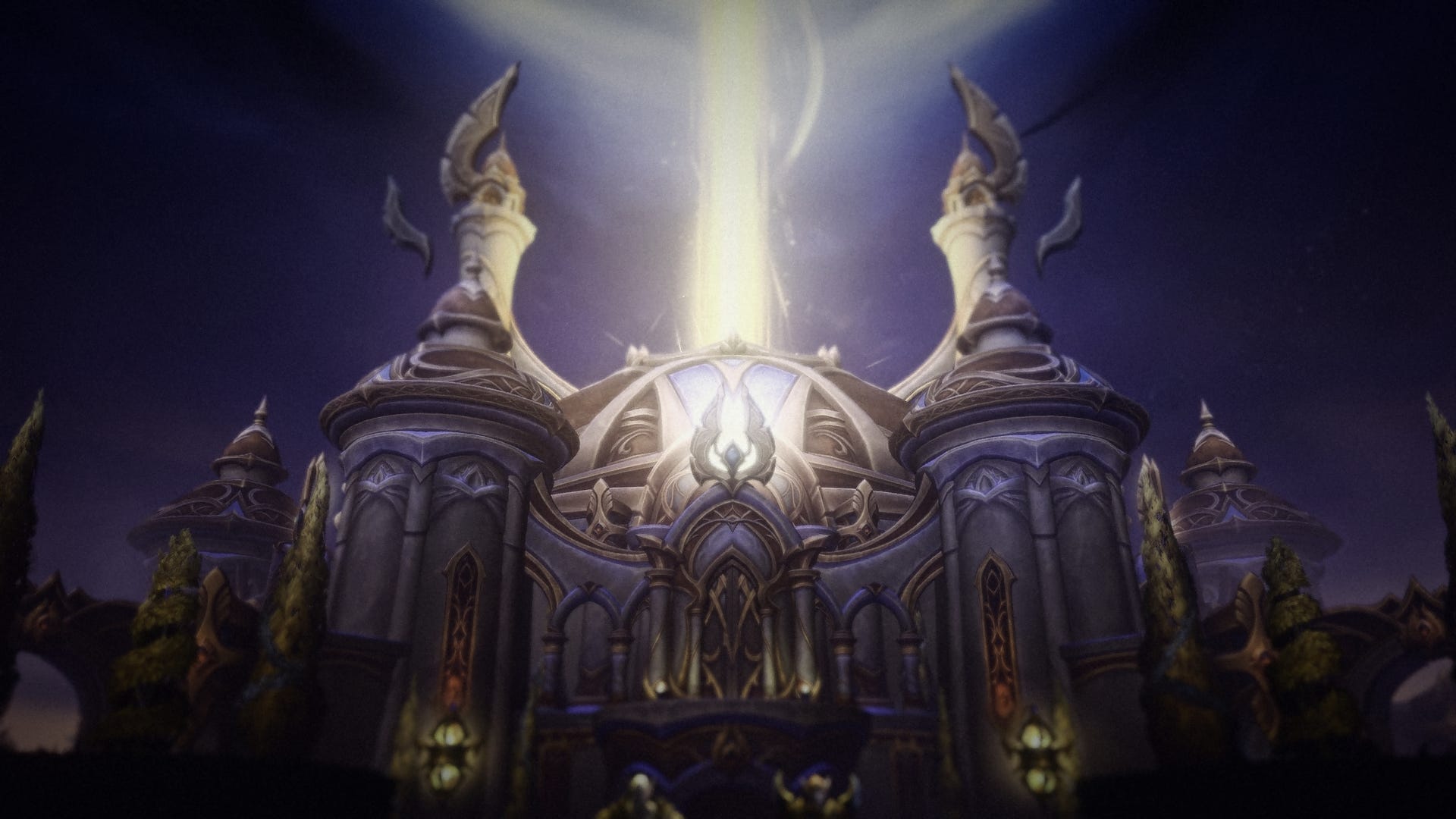
I remember during “The Burning Crusade“ expansion back in 2006 what it was like to come to Quel’Thalas for the first time as a player. Before that, a lot of people who played Warcraft 3 speculated what it was like, and what had happened to the elves since Arthas’s march to the Sunwell and the Frozen Throne expansion pack.
Creating a Blood Elf, remembering the campaign with Illidan in “Frozen Throne”, and then loading into the game was magical. We were greeted with the iconic opening scenes and narration, then the slow zoom into the starting area until we landed on our newly made character.
Questing was pretty relaxed as all training areas were meant to be, and we quickly delved into what had happened since, and the lore of Quel’thalas as well as Silvermoon itself. The city was literally divided by the dead scar, the lands south that bordered the plaguelands corrupted by the blight, the Amani trolls to the east, ready to kill us the moment we walked on their lands, and what Kael’Thas and the Sunfury were doing in Outland.
The people at the time were on the verge of entire societal collapse, and we, as a Blood Elf player, were a witness to the near eradication of our people. The population since the Sunwell’s corruption had plummeted by 90%, mana addiction was at an all-time high, and those who couldn’t, or wouldn’t, adapt to the fel energy risked becoming withered, desperate, and feral, and we had to help as much as we could.
“The Burning Crusade” expansion had plenty of plot hooks for adventuring and exploration, but one of the biggest ones that most players remember was helping the Blood Elves with their mana addiction and reclaiming the Sunwell from the demons who wanted to use its latent powers to summon Kil’jaeden to Azeroth. What started as us reclaiming Quel’Danas piece by piece, and eventually unlocking the Sunwell raid, ended up with us at the end stopping Kil’jaeden from entering Azeroth and using the heart of the naaru M’uru’s to rejuvenate the Sunwell, uncorrupt it, and empower it with light. Which ended up not only rejuvenating the Blood Elves, but bringing redemption to Lady Liadrin and the Blood Knights, and setting the stage for Midnight years later.
For early Warcraft, it was an emotionally good story, and one I remember fondly, given I was young and TBC was the first expansion I fully threw myself into. However, looking back on the classic version of Eversong Forest, Silvermoon, and Quel’Danas with rose-tinted glasses, it makes me wonder how they’ve held up to that memory since Midnight’s release a while back.
Well, in a lot of ways, it’s held up extremely well, though in some ways it also hasn’t. In fact, let’s take a deeper dive into the zones, their story, their graphics, and see how it compares to Classic times, how its modern interpretation has changed, retconned, or even ‘fixed’ some of the lore, and my personal opinions on things.
Starting Quests - Midnight’s Introduction
Let me just say that ever since “Mists of Pandaria“, World of Warcraft has knocked the introduction quests out of the park and easily got players ramped up for the expansion. In MoP, it’s jumping into a literal battlefield; in WoD, it was fighting through thousands of Iron Horde to get to the other side, then scattering ourselves across Draenor after our escape. In Legion, it was the Broken Shore, in BfA it was the Battle of Lordaeron, and Shadowlands...
... Look, the opening in Shadowlands was alright. So they all can’t be gold.
What I’m trying to say is that Midnight’s opening was excellently done. We’re called by the image of Lady Liadrin to help. We’re zipped to the Sunwell, immediately taking place after the opening cinematic, and then we help the rest of the Vanguard secure Quel’Danas from the hungering host of void-spawned monsters summoned by Xal’atath.
It’s a great way to get around the isle, and feel like we’re fighting in a desperate bid to hold back the darkness before it all gets resolved in a way that implies it can all fail at any minute and that we - the Champion of Azeroth - must quickly go secure additional help to hold the evil at bay. From there, we can either fly straight to Silvermoon City or walk the long bridge.
In my first playthrough, I opted to walk across the bridge, and I’m glad I did. Seeing Silvermoon come into the distance, the NPCs marching back and forth from Quel’Danas to Silvermoon, and behind me, the light barely holding the Voidstorm at bay was cinematic and beautiful, not to mention awe-inspiring. It gave me a sense of scope and the magnitude of what was to come once I reached the city and started the Expansion Campaign properly. It certainly ranks up there in my top 5 cinematic moments in World of Warcraft.
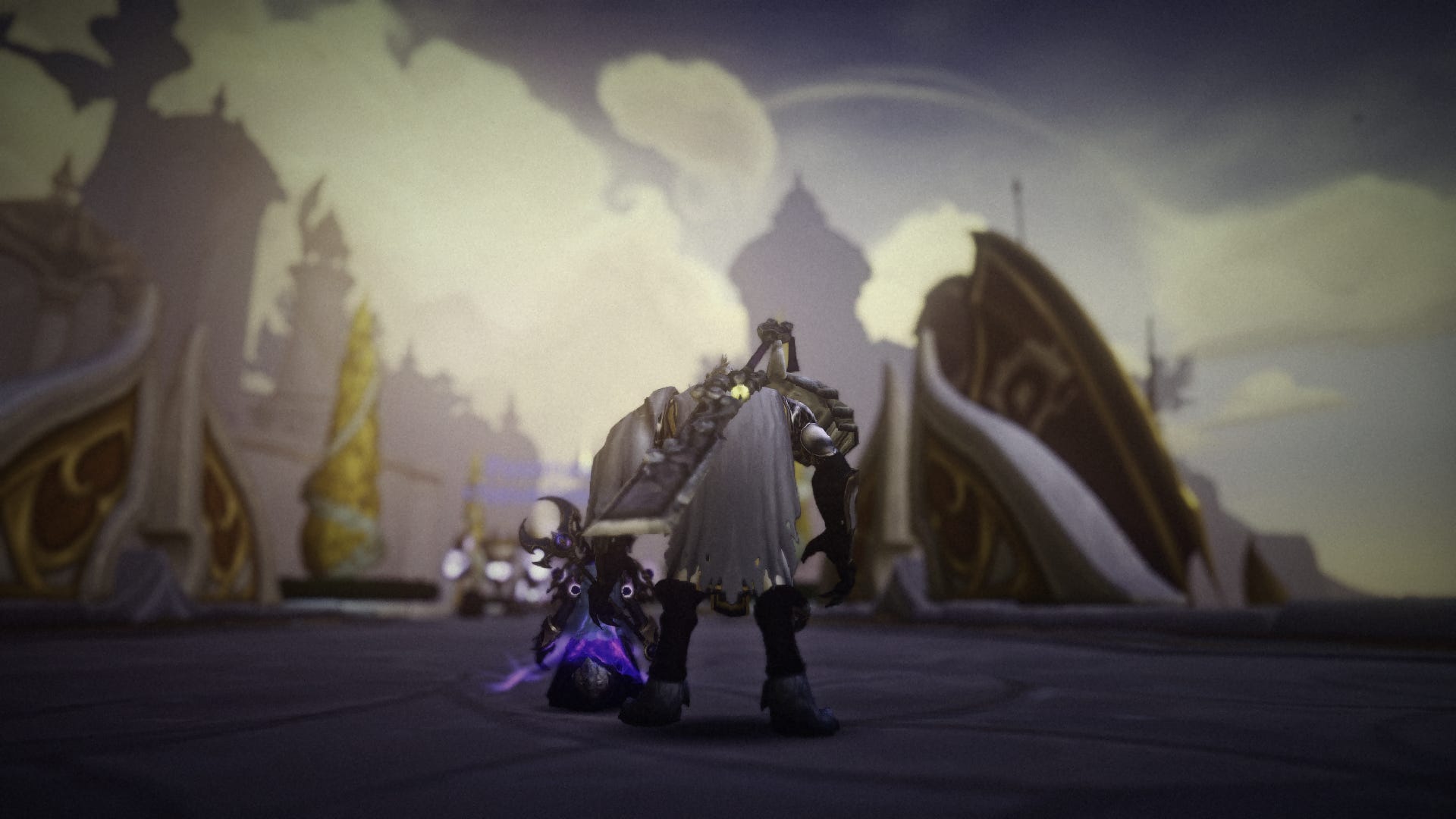
Quel’Danas
Absolutely magnificent in a fantastical way. The art team really outdid themselves with the architecture and the updated graphics of the isle.
Back in 2006, the first time we really got to see Quel’Danas and the Sunwell (for those who hadn’t played Warcraft 3) was during one of the last major patches of the expansion. The Shattered Sun Offensive, led by Blood Elves and Draenei, opened up a Faction-centric race to unlock the isles’ features, where each faction was granted bonuses if they were the first to unlock an area.
Areas that included Magisters Terrace, additional daily quests that dropped currency, reputation, blue-quality items (genuine upgrades at the time for those who didn’t raid), and finally, the Sunwell Raid.
It was not just a faction race, but also a server race. Naturally, larger, more populated servers unlocked things a lot sooner, and top guilds at the time transferred to try to get world-first on Kil’jaeden and beat the Sunwell raid. There was simply nothing like it at the time, and many players felt it was a vast improvement over the An-Qiraj event from Vanilla.
Now in “Midnight“, there wasn’t any retaking of the isle aside from the opening questline, but the Isle itself is gorgeous, and so evocatively baroque that RP walking around the grounds feels like you’re exploring a fantastical, lived-in world that’s holy and considered the center of power for an entire civilization.
If there had to be a nitpick or critique, I’d say that it’s sad that NPCs aren’t seen around the isle save for the main Sunwell room, where a majority of the Vanguard of Light is located. As it is, it’s still gorgeous, and takes at least me and other players who were there back in the day - or who play Classic now - down memory lane.
Silvermoon City - The City of Elves
Silvermoon City is the one zone in the entire expansion that players will be spending a lot of time in. It’s the central hub from which everything can be found, from the Auction House, Bank, Great Vault, The Crafters, Delves, and the Prey system. When you’re in between questing and doing content, you’re going to be here.
During “The Burning Crusade“, Silvermoon was one of the most beautiful cities in the game with its gold, white marble, red aesthetic, and tall towers. While you couldn’t fly at the time, being on the ground made it feel like you were walking around a beautiful old city that was past its prime, and stepping into a well-lived area haunted by the horrors of the past.
Over time, the new faded away, and as things happened, the further in the game’s lifespan we go, the lustre wore off. Silvermoon was predominantly a city of hallways without much to keep people coming back after TBC ended. You couldn’t fly, so getting around was relatively a pain in the butt, and what had been top-of-the-line graphics in 2006 started to look clunky and chunky by the 2020s.
When the rework of Silvermoon was first announced, I admittedly thought they’d just give it a fresh coat of paint, fill in the gaps, and let us fly, and that would be it. I kept myself as spoiler-free for “Midnight” as I could, not wanting to see anything that would potentially spoil me on the story since I’m just a writer, and not a journalist.
Let me tell you that after walking the bridge from Quel’Danas back to Silvermoon, I was absolutely blown away. Not only is the city roughly four times the original size, but it doesn’t even LOOK like Classic Silvermoon! Gone were the hallway-like roads, the Dead Scar in the middle, and they added multiple layers to the city to truly make it feel all-encompassing rather than just a backdrop of a few shops, a few quests, and nothing else.
Personally, that’s my favorite part of Silvermoon: The NPCs. NPCs walk around, chasing after pets, talking to one another, shopping, or riding carts, and in general acting like background characters to the story that’s going on. They’re not static, or, at least, most of them aren’t, and it makes the world feel lived-in.
Quests
There’s a plethora of side quests one can go on in Silvermoon, and honestly? Nothing really to talk about here. They’re pretty good, fill out the world and story a little bit more, and give some insight into the Sin’dorei as of the current expansion’s lore.
My personal favorite side quest has to be either the Murder Row opening or the one where you’re helping a Blood Elf tailor fix an old Thalassian cloak worn by a Draenei Vindicator. In the former, it’s a questline meant to open a dungeon (though it’s open on the outset) where you’re investigating illegal fel usage. In the latter, the Blood Elf tailor turns away every non-elven patron but gets convinced to help the Vindicator when he sees the man bring in a well-made elven cloak.
No spoilers for those who hadn’t done it, but that quest brought a tear to my eye.
Critiques
Despite all the praise I have for the city itself, there are a few critiques I do have.
For starters, the faction divide.
I remember when it was first announced, a lot of people were... well... divided on the topic of the city being segregated into neutral and Horde areas. For some, it didn’t make sense, and they disliked the idea that they weren’t allowed to be in the whole city, while others thought that it made sense to keep the Alliance segregated because it doesn’t make sense to allow the Alliance into a Horde city at all.
Arguments raged back and forth across social media and Discord channels; people even made YouTube videos about it regarding their personal opinions. In the end, it ended up a nothingburger because everything of note is already in the neutral parts of the city, with literally nothing of note in the Horde segments.
My opinion is that they should have done away with the factional divide or gone harder on it. Doing away with it would not have changed anything, as no one goes to the Horde section anyway, and the story is faction-blind to begin with (more on that later). Had they gone harder and provided some things that can only be accessed Horde side - such as additional quests, the Auction House, and other personal amenities - it would have made it worthwhile to go and drive home the point that Silvermoon IS a Horde city.
Aside from that, there’s really not much in the way of critique. It’s a beautiful city, and I love running around to every little crevice I find.
Eversong Forest
I feel like I keep harking back to “The Burning Crusade“ expansion, and it makes me feel like such an old millennial, but it’s hard not to make comparisons to an expansion that built the foundations of the current one.
Back in the day, Eversong was gorgeous, and I talked enough about it earlier. Suffice to say that Eversong Forest is beautifully remade for “Midnight“ and comfortable to explore.
In fact, that’s probably one of its best features: the fact that it’s easy to maneuver around. All the roads connect to the major questing hubs, with mountains rarely getting in the way, or forcing you to find alternative means to traverse the zone if you’re a player who likes to explore and take their time on their first go of the campaign.
Naturally, this is nearly 20 years after the events of TBC, so the zone isn’t as fractured as it once was and broken apart by Arthas’s march to the Sunwell. Gone are the Dead Scar, the Ghostlands, and any signs of corruption from the Scourge, save for the woods being somewhat haunted around Windrunner Spire. Expanded areas do include the small towns that originally inhabited the zone, such as Tranquilien, Goldenmist, and Fairbreeze. Plus, the Dead Scar has now been repurposed into a long road up to the new entrance in the center of the city. Though Horde can go to the old entrance to see the revamped areas there.
Best of all, if you want to visit the old zone, you still can. There are several ways to do it. The most direct way to do it is to fly south till you reach the border. There’s no longer a loading screen between the zones. However, at the old gate, you’ll find Zidormi, who is standing next to a portal. Click on her to be transported to the old TBC zone, or simply go into the small portal beside her. Either option takes you to the classic zone.
The second way to do it is to go to Shattrah City and click on the portal that takes you to Quel’Danas. That’ll take you to the old version of the Isle from TBC, and from where you can get a flight point out. The third way is to click on the Silvermoon Portal in Orgrimmar titled “Silvermoon (The Burning Crusade)”. The last way is to create a new Blood Elf character and do the starting zone.
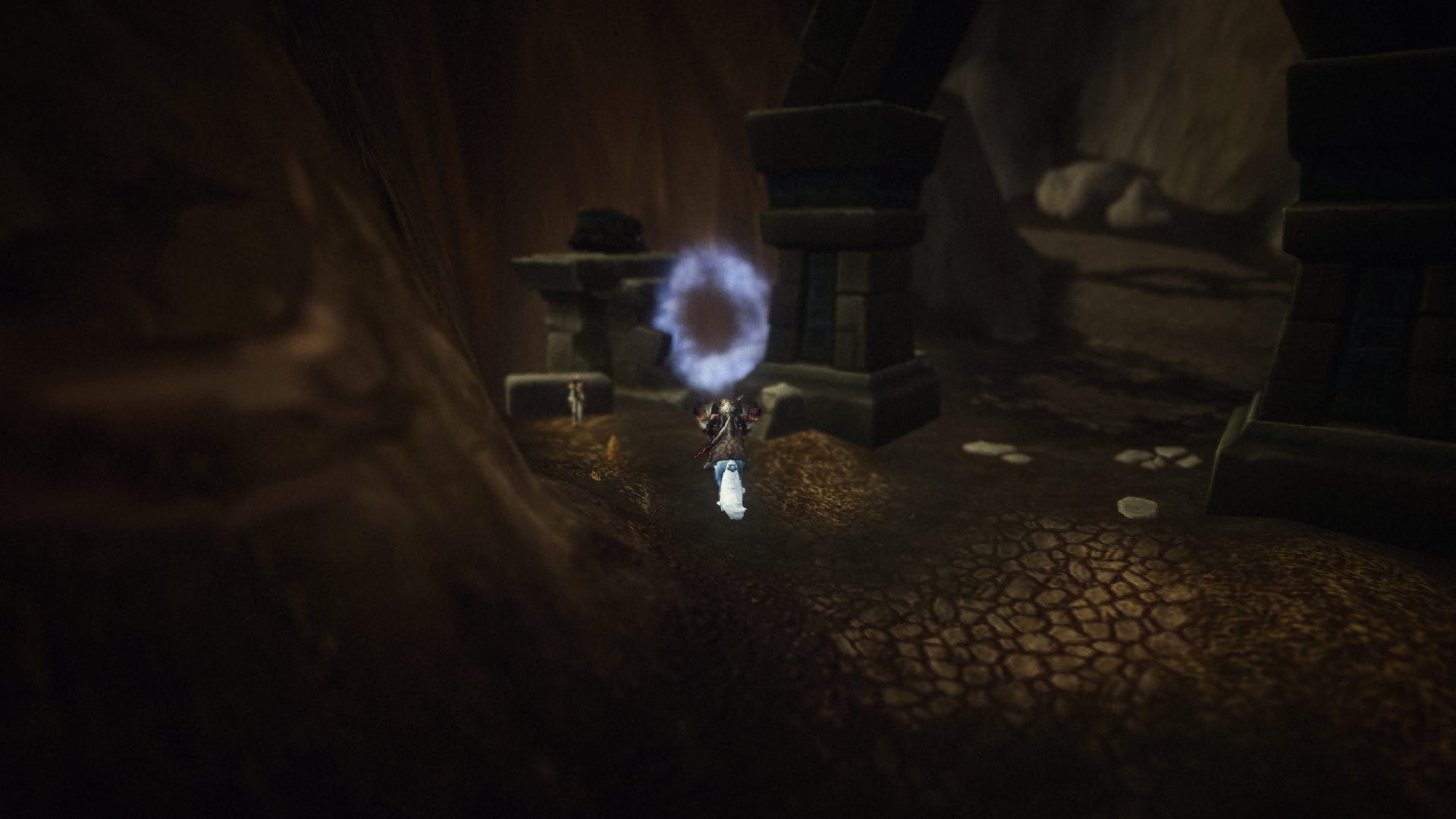
Obviously, the first way is best for Alliance. If you’re looking for transmogs, to Roleplay in the zone, old quests and achievements, it’s as simple as that! Plus, it’s a nice way to run around and see the differences 20 years can make.
Overall, my personal opinion is that this is my favorite zone out of the whole expansion so far, primarily because of how relaxing it is.
Critiques
Unfortunately, for how much I gush about how beautiful it is, and how much I did enjoy the story, there are a few critiques I have where I felt they didn’t go far enough.
Let’s start with the elephant in the room because it’s going to come up later regarding Midnight’s Story: The Horde.
There’s hardly any Horde presence. Like... at all. Yes, you have a few Forsaken NPCs in some of the towns, namely Tranquilien, but you don’t SEE any other Horde characters there, either visiting, living, or helping out. No Orcs hunting in the woods with the Farstriders, no Tauren Druids helping to ensure that the ghostlands are being healed of the blight, no Trolls wanting to help out with the issues with Amani (more on that in the next section). You don’t even see the Shal’dorei till the end of the game, and Thalryssia - who is canonically married to Lor’themar - doesn’t even come to help until she’s needed to move the story forward.
I can understand not wanting to throw every race into the mix just to create token NPCs, but it really would have made it feel like a Horde-based expansion if they had added in SOMETHING to make it seem that the Blood Elves belonged to a faction, or said faction was taking the threat to the Sunwell seriously.
Orc merchants wanting to trade stuck in the harbor, questioning whether they should go into town and grab some weapons and head out there. Tauren’s helping with what remained of the Ghostlands. Forsaken by Windrunner Spire, helping to hunt Sylvanas loyalists who broke in looking for Sylvanas items. Could have even non-paladin, Horde-based Argent Crusaders at the border saying they heard about the Vanguard of the Light, and they’re there to help, even if they don’t command the light.
Another critique I have is that some of the side missions also feel a little superficial, especially regarding the Amani. While I’m not looking for all of the quests to be serious or show how tense relationships with the Amani are, I at least would have liked some quests that delved into the lore of Eversong since TBC. Something that included how they cleansed the ghostlands, destroyed Darkholme, how they dealt with Dark’han, and reclaimed much of Eversong and secured it during the Fourth War. I want to know how the world had changed and what normal people have been doing during that time.
But, in the end, I admittedly did like what we got.
Zul’Aman
I didn’t know what I expected from this zone and its story when I first walked into it.
Troll stories have been either hit or miss throughout Warcraft’s history, with some of the better ones standing out for how well executed they are, while others have fallen flat. Thankfully, the ones that have hit, such as Throne of Thunder from MoP or the entirety of the Zandalari story from BfA, have set the standard of what Troll lore should be like, even if Trolls have been Blizzard’s favorite go-to enemies for a while.
Zul’Aman, thankfully, has continued being an excellent addition to the “it’s good” camp. Not only is the zone large and varied enough with sub-locations to make it interesting without being ‘samey’, but the overall story is well done, even if I do have some critiques I’ll get into shortly. While it is mountainous, it is easy enough to get from Point A to Point B relatively quickly with various roads winding into the mountains, and it introduced some of my new favorite characters to the lore.
Zul’Jan is who I’m talking about, of course. While Zul’Jarra does start with some serious bite, distrusting Liadrin and us, Zul’Jan makes it very clear, even till the end, he does not like us and will never like us. What I like about that is that he’s not painted as a villain for his dislike, either. He has a lot of legitimate reasons for not liking the gokinye (Amani term for outsider) or the Loa, and while he is shown to be impetuous and impatient, he’s never treated as a buffoon for his actions.
I also liked Speaker Kinduru, but that’s because I have a soft spot for kindly old people who are helpful, and maybe a little crazy. I also loved how the NPCs react to you harshly, even outright threatening you in their dialogue at the start, but as you go up in reputation and get further in the story, they start to treat you with respect and even admiration.
The zone itself is sprawling with things. Trees are packed tightly together, giving the forest depth, with steep valleys you can climb down into, or hidden caves to sneak off to explore. Plus, the old Zul’Aman raid from the Classic days is open, and is the start of several questlines there, as well as the Atal’Aman Delve, which uses the whole area.
In fact, you see Atal’Aman right at the start. You first encounter the steps of it at the end of the Eversong storyline, and if you go back to help Liadrin with the Amani negotiations, you have to fight through the whole area reminiscent of the old raid itself.
While I clearly enjoyed how relaxing and laid back Eversong was, a lot of new, simple mechanics were introduced into Zul’Aman that I wish were expansion-wide. At the end of the main campaign, you can worship any of the Loa you helped along the way, plus several additional ones, and their worship gives you additional benefits in the zone.
Plus, a few of the side quests were excellently done. The questline where you’re helping a Brother and Sister reconcile with one another and the abuse they suffered under a parental figure beloved in the community, and how the community responded to the abuse being talked about, was handled extremely well. I thought it would have been more hamfisted, but it was nuanced in its pain and complex in how the siblings loved one another, but the trauma almost broke their bond.
Despite all the praise I have for it, there are a few critiques I still have.
Critiques
The storyline overall is good. It’s about the Amani overcoming the old hatreds of Zul’Jin and what Malacrass did to the Loa back in the day. The Amani are essentially fracturing and falling apart because the Loa are not there to help support them, and thus, they’ve turned to infighting and a dwindling population.
But there are three points of contention I had with it.
The first is obvious: it does not acknowledge other Troll characters in a significant enough way. If you’re playing either a Darkspear Troll or Zandalari Troll, you’re still considered a gokinye, even though they’ll refer to you as “kin” or something similar, but there’s no real advantage to it other than some change in dialogue.
This leads into my second critique: No major Troll characters outside of Amani show up, which also circles around to how there’s no real Horde presence in “Midnight“.
Which is unfortunate. LOADS of Troll characters could have made an appearance in some way, wanting to help out with peace between the Sin’dorei and Amani. Zekhan was a character who, in supplemental books, was shown to be an ambassador of the Dark Spear to Zandalar and who had helped Princess Talanji in the past. Wouldn’t he want to expand his ambassadorial role? Princess Talanji helped to settle an alliance between the Zandalari and Horde, and wouldn’t be interested in bringing her unique perspective to Zul’Jarra?
These are just a few examples of the characters they could have used in some capacity to help the storyline without significantly altering it.
That leads us to my third major critique: The Amani and Elves seem to drop their animosity almost immediately. Quel’thalas and the Amani have been warring for thousands of years over land and ideology. They absolutely hate each other and are one of the reasons why the High Elves joined the Alliance of Lordearon in Warcraft 2.
Yes, Zul’Jarra and Zul’Jan - and by extension the Amani - aren’t happy with you or Liadrin being around, but after you and Liadrin become Zul’Jarra’s hash’ura, the tone noticeably shifts and old hatreds are never really brought up. There’s a side quest with an old Amani lumberjack who helps out a teenage elf looking for revenge, but it’s less about dealing with the painful past and more about “We’ll put the kid on the right track” without bringing up anything else.
All we get is that elves and trolls dislike each other while showing none of the reasons why. No discussion on colonization, racial wars, kidnappings, or anything like that. It was sterilized and glossed over so as not to make any new lore uncomfortable while the old was tossed away.
Good storytelling? I don’t think so because doing so robs the players of seeing any actual advancement or reconciliation. Those who have been playing Warcraft for a long time, who read the supplemental lore, or played the old RTS games, feel as if it was forgotten or removed because it might be problematic, while new players who hadn’t seen the lore won’t question it. Blizzard didn’t have to get into the weeds of it or make it the main focus of the storyline, but some genuine conversation would have gone a long way in showing progress, and even open the avenue for supplemental short stories or additional side quests.
I’d mention how I would have done it, but I intend to save that for a future article on Blizzard’s writing. Suffice to say, I don’t have a problem with Liadrin being a hash’ura for Zul’Jarra since it’s the start of their respective cultures’ reconciliation, but I wish it also came with additional Troll characters from the Horde who could have either helped or even been considered.
There is one last additional critique, but it’s really more of a plea. Blizzard’s writing team tends to villainize characters with less-than-altruistic ideals, and I really hope they do not with Zul’Jan, mostly because I believe the setting needs some nuance. It needs a balance to a lot of the other plot elements that are going on now, and Azeroth is large enough that multiple views and character types can - and really should - exist to have players latch onto.
Harandar
Harandar was a pretty place, and it looked like what I expected from the vivid descriptions in the Short Story “The Quiet at the End of Us“. It was also one of the shortest campaign missions in the game, so we didn’t spend a lot of time here.
Personally, I enjoyed how it looked with its lush foliage, dense roots, wide fields, and rushing rivers, but then again, I’ve always been a sucker for the wilder, untamed parts of Azeroth. Ashenvale, Val’sharah, Ardenweald, and other places are enjoyable to me because I don’t get out in nature as much as I should, and when I do, I love just sitting in some quiet woods beneath the trees on a nice warm evening, listening to nature around me.
Harandar was pretty much the same. Plus, I was admittedly a little intrigued by the lore. Story-wise, there were some things I didn’t quite enjoy, which I’ll mention below, but. What I did see was enjoyable enough.
One of my favorite parts was during the main campaign, where you had to go into the Gulf of Memory. Up until that point, it was clear that the Player Character and Halduron were the only outsiders ever to come to Harandar, and the moment you entered the Delve, Valeera was waiting for you.
How did she get there? No clue. No one questions it or brings it up. As soon as you leave, she disappears, and no one says anything, and that was honestly hilarious to me.
Otherwise, you have some pretty decent side quests as well, personal favorites being where you help a young girl stick with her belief in fairytales, or help another child to honor their master who was murdered.
Critiques
A lot of my critiques regarding Harandar come from the fact that it’s obvious its inclusion was an afterthought, and that they dropped so much of the stories from “The War Within“ that never got resolved.
Remember the Black Blood? The writers didn’t. In TWW, it was the entire reason the Haranir came from Harandar, because the Black Blood was seeping into their world and affecting the roots of the world tree, and they needed to figure out a way to stop it. It led all the way to Undermine, where Gallywix and the Darkfuse used it in service to Xal’atath and then...
Well, after that, nothing. Once we get to Harandar, it turns out there’s really nothing wrong aside from the Light Bloom. There’s no mention of the Black Blood ever again, Orweyan doesn’t bring it up, and that’s it. This suggests that Harandar was originally meant for TWW but was cut and repurposed for “Midnight“ since, at the time of TWW, we already had Undermine as the massive mid-point patch sandwiched between two smaller zones and storylines.
Another critique I have is that the Haranir themselves don’t seem to have a concrete origin. Even in the quests you do for them, their origins seem to conflict with one another, and not even they know where they came from or how they got to Harandar to begin with.
Personally, I’m slightly okay with that. While I would have preferred something more definite, a little bit of mystery does make for some interesting speculation that can come up again in the future. My only real problem with this is that it came right after the other, muddled everything up, and was a part of the main questline.
The Voidstorm
I liked the quests getting to the Voidstorm, but I did not like the zone all that much. Like above, I’ll explain what I liked first.
The questline to get into the Voidstorm was well done. It was a race against time before it inevitably breaks through the Sunwells defenses and consumes Quel’Danas, and it’s up to us to figure out a way to either get rid of it or breach it and take the fight to Xal’atath directly. Since the Vanguard of the Light is on the verge of collapse, we need to get inside of it, but doing so would kill us without some way to get beyond the event horizon.
So we work with Umbric to do it. He has the theory, the skill, and it’s a risky gamble, but we have precious little time to put it into practice. It’s now or never, and it works.
To me, it was excellently well done, and while we - the Player - know that we have all the time in the world to complete it, I really felt the urgency of the mission both in dialogue and quest.
Unfortunately, that’s where a lot of my positives with it end... well... aside from a few side quests centered around our negative emotions and how to deal with them, and Decimus, who is just an unrepetent asshole that you can’t help but like (even if you know he’ll betray you). Though one of my favorite quest chains did involve helping Tul’amar, the Twice Exiled. I won’t spoil her story chain, but suffice to say it’s pretty sad, and has special dialogue options if you’re a Draenei. One of my favorite things about it is that it expands on the Draenei lore and shows there’s a whole universe out there beyond Azeroth.
Critiques
I know a lot of people who enjoyed the zone for what it was, with some, even Ian Bates (whose thoughts can be seen here on his Bluesky Account [LINK BLUESKY POST]), saying it was their favorite. So this is more of a personal opinion rather than an observation or an analysis.
What made the Old Gods such terrifying, potent enemies in World of Warcraft’s lore was that they were extremely Lovecraftian nightmares. They were so grand in scope as to make us seem so small and insignificant. I don’t use the term Lovecraftian lightly. They were so beyond our understanding, with their machinations and plans so alien as to be maddening, and their designs were something that we could not even fathom. They were beyond anything, even the stars, and they were terrifying on a cosmic scale.
Their whole purpose towards the mortal races of Azeroth was to sow discord and madness. Even looking upon their servants drove those who came to understand them insane. Storyline-wise, we knew that the Void Lords had sent them to Azeroth to corrupt it for their purposes, and thus was born the Black Empire before the Titans came, but that was all that we knew of their plans.
Seriously - look at Yogg Saron, N’zoth, or even Il’gynoth. They’re so stereotypical of cosmic horror.
So I had high hopes when we got into the Voidstorm because it took us directly to the void, and... it’s just another variation of “super hell”. It’s no different from The Maw, or any other place of pure violence. Turns out the void just feeds off of negative emotion, and it’s an ecosystem built off of violence.
So it was a let-down. I was envisioning cities of impossible architecture, fields of flesh, and towers of metal. Hell, even a Carcosa reference. Everything is spiky; there are different ecosystems and forests, it’s mostly hills, mountains, and monsters that eat each other. Even the Domanaar are just rehashes of the Jailor’s lieutenants from Shadowlands, right down to the shadowgrafts. Now that I’ve written that, even the Alnspawn from Harandar and the maw itself better represent the chaos of what the void should have been.
In effect, it’s just another world similar to our own, without any of the horror of the chaos.
Another critique I have is that exploration on foot is practically nonexistent. As I mentioned in my Eversong section, I like to walk/run everywhere with minimal flying on my first playthrough. The developers spent the time crafting the world, and thus, I want to explore. Eversong, Zul’aman, and most of Harandar were easy enough with traversible paths and roads to get from questing area to questing area, but Voidstorm, I had to fly everywhere. There were no roads, no obvious paths, tightly packed mobs, and some quests took me up a sheer mountain wall, where running around took more time than just doing the quest itself.
While the Delves are fun, it’s not really a zone I look forward to coming back to, honestly.
Do I have a critique for the story? Not really. Not in any major structural way, like I’ll mention later on. Lothraxion’s death wasn’t as impactful as one would think from a character that had been around since Legion, and felt more like an afterthought with how he was corrupted by his own zeal and the propelling of his growing paranoia towards the void.
A shame really, since Lothraxion had a lot of potential as a story character to showcase the nature of his being as a light forged vs. him being a dread lord, and whether or not he can actually be trusted. Ending him as quickly as we did without repercussions felt like Blizzard wanted to whittle down their cast of characters since his death really didn’t make an impact. The ending would have been the same whether we saved him or not, and with his death, Alleria and Turalyon had only a few lines to say about it before moving on.
The Arcantina
What a neat place!
Seriously, this is one of the more interesting places in the expansion. It’s a nice little addition that you can zip to, acts as a secondary hearthstone, and gives both some interesting quests for housing decor as well as insight into some old lore repurposed into the newer lore. Plus, you can pick up small RP items for funsies, such as growth pots, inky black pots, savory delights, and more. It’s overall a fun place that might not get much use outside of the weekly decor quests unless you’re an RPer looking for a filled tavern to hang out in.
Critiques
I have no critiques about the place, other than it’s indicative of Blizzard’s current writing, where they shave off the rough edges of their lore. On a personal level, I’m fine with the characters having a neutral zone to mingle and be forced to get along. In fact, it’s kind of fun to see them comparing how similar they are.
From a storytelling standpoint, though, it feels rather hamfisted. For every moment I smirked, I also equally had moments where I rolled my eyes. I don’t mind Cozycore fantasy (its a guilty pleasure in between my Horror binges) but when I see characters who were at each others throats several expansions ago finishing each other sentences, laughing, and clinking mugs together it makes me wonder if there are going to be any meaningful resolutions to long standing feuds and hatreds, or if Blizzard is going to handwave them away as “they’re friends now.”
That’s honestly my biggest worry. A lot of those feuds, those angers, those hatreds, and old wounds could have made for excellent storytelling in later expansions or patches. Look at Saurfang’s character arc at BfA all the way to his death. He was captured, willing to die because the Horde had changed from the brotherhood it was to an engine of war for the second time in his life, and Anduin sees that pain and realizes helping Saurfang will bring the war to an end with far fewer casualties on both sides. They prepare for another Siege of Orgrimmar, the Mak’gora happens, Saurfang dies, Sylvanas is humiliated, and Anduin is the first Alliance leader in history to walk into Orgrimmar peacefully, having earned respect.
When character conflicts resolve like this, not only is it cathartic for those of us who experienced the long-standing storyline over multiple years, expansions, patches, and additional content, but it can also be useful for creating additional stories connected to that event. In that example above, Saurfang’s death and sacrifice played a key part in Zekhan’s character development, affected Anduin, and other characters used his death as a springboard for additional stories. That’s what makes Warcraft compelling as a vehicle for storytelling and a persistent world to get lost in.
So when you use the Arcantina to simply resolve the conflicts without the player being able to either witness the resolution or have input, it rings flat. Granted, several of the characters have no reason to fight one another, being a part of an organization together, but they constantly make allusions about how most of them would not have gotten along with one another in the past. All it does is close the door on potential story developments, and if they were to spring up again for any reason... well... then it makes players ask ‘what was the point?’.
For now, this is all I have to say about the new zones added to “Midnight”. There’s a lot more to review, though, so keep your eyes open for a part 2 coming in a few days.